

Understanding different number systems can make mathematics more interesting and practical. Roman numerals are a fascinating example because they use letters instead of familiar numerical digits. These symbols appear in historical records, book chapters, clock faces, monuments, and many other places. For students and everyday users, a Roman Numbers Converter offers an easy way to interpret unfamiliar combinations and change ordinary figures into traditional notation. Learning this system also develops numerical awareness and introduces an important part of ancient history. With K4Converter, users can explore number conversions and understand Roman notation more conveniently.
A Closer Look at the Roman Numbers Converter Method
The Roman numbering system originated in ancient Rome and became widely used throughout the Roman Empire. Its structure relies on seven primary letters, each representing a specific numerical value.
Unlike the decimal system, Roman notation does not use place values in the same way. Instead, it combines symbols through addition and subtraction to create different numbers.
A Roman Numbers Converter helps simplify this traditional structure for modern learners. Rather than memorizing hundreds of combinations, users can understand the basic symbols and apply a few important rules.
Seven Symbols That Build Every Standard Number
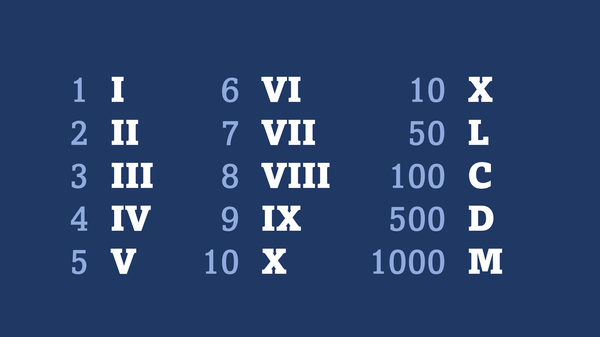
The foundation of Roman notation consists of seven letters. Learning their values makes larger combinations easier to understand.
- I represents one.
- V represents five.
- X represents ten.
- L represents fifty.
- C represents one hundred.
- D represents five hundred.
- M represents one thousand.
These symbols can appear individually or together. For example, II represents two, while VII represents seven. Similarly, XV represents fifteen.
A Roman Numbers Converter can help users recognize these combinations and understand how each letter contributes to the complete numerical value.
Understanding Addition and Subtraction Principles
Roman numerals follow specific combination rules. When a smaller symbol appears after a larger one, its value is generally added.
For example, VI represents six because five and one are combined. Likewise, XIII represents thirteen.
However, placing a smaller symbol before a larger symbol indicates subtraction in certain accepted combinations. Therefore, IV represents four, while IX represents nine.
The same principle applies to larger values. XL represents forty, and XC represents ninety. Understanding these patterns makes the numbering system easier to read.
A Roman Numbers Converter provides a convenient reference when users encounter combinations they have not studied before.
Where Traditional Number Symbols Still Appear
Although modern mathematics mainly uses Arabic digits, Roman numerals remain relevant in several areas. Their distinctive appearance makes them useful for identifying, organizing, and decorating information.
Common examples include:
- Traditional clocks: Some clock faces display Roman symbols to represent hours.
- Published books: Roman numerals often identify introductory pages and sections.
- Royal names: Monarchs sometimes use these numbers to distinguish rulers with identical names.
- Historical monuments: Inscriptions may include dates written using traditional notation.
- Entertainment: Movie sequels and major sporting events sometimes use Roman numbering.
A Roman Numbers Converter makes these references easier to understand. Consequently, users can recognize numerical information in historical and modern settings.
Improving Accuracy When Converting Large Numbers
Converting larger values becomes manageable when you divide them into smaller sections. Start with thousands, followed by hundreds, tens, and individual units.
For example, 348 can be separated into 300, 40, and 8. Their Roman equivalents are CCC, XL, and VIII. Combined, they form CCCXLVIII.
Similarly, 1994 becomes MCMXCIV. This representation combines one thousand, nine hundred, ninety, and four.
A Roman Numbers Converter helps verify these results and reduces uncertainty when working with complicated combinations. Students can also compare manual answers with digital results to strengthen their understanding.
Learning Benefits for Students and Curious Readers
Studying Roman notation introduces learners to a different approach to representing numerical information. It encourages logical thinking because users must understand how symbols interact rather than simply reading individual digits.
Teachers can introduce these symbols through classroom exercises, number games, and historical examples. Parents can also help children practice by identifying Roman numerals on clocks or in books.
A Roman Numbers Converter supports this learning process by making unfamiliar values easier to check. Furthermore, repeated practice helps learners recognize common patterns without relying entirely on reference materials.
K4Converter offers a convenient starting point for exploring digital conversion concepts and developing numerical confidence.
Mistakes That Can Change the Meaning of a Number
Incorrect symbol placement can produce invalid Roman numeral combinations. Therefore, understanding standard notation is essential.
One frequent mistake involves writing IIII instead of IV. Although IIII appears on some traditional clock faces, IV is the standard modern representation of four.
Another error involves repeating V, L, or D. These symbols are not repeated in standard Roman notation. Users should also avoid placing subtraction symbols in combinations that do not follow accepted rules.
Checking unfamiliar entries with a Roman Numbers Converter can help users identify mistakes before using the results in assignments, documents, or creative projects.
Financial Planning Through Simple Online Calculations
Digital calculators also make routine money management more convenient. A Discount Value Calculator allows shoppers to determine the savings offered on products through percentage-based discounts. By entering the original price and discount rate, users can estimate the reduced cost before purchasing an item. This information helps compare promotional deals, understand actual savings, and plan shopping expenses more effectively. Whether buying clothing, electronics, or household products, knowing the final payable amount supports informed decisions. Such tools reduce manual calculations and make everyday budgeting easier for individuals and families.
Making Number Conversion Part of Everyday Learning
The best way to understand Roman notation is through regular practice. Begin with simple numbers before moving toward larger values. Compare different combinations and identify how addition and subtraction affect their final meanings.
You can also explore dates, book references, and clock displays to discover how these symbols appear in everyday environments.
Whenever an unfamiliar combination creates confusion, a Roman Numbers Converter can provide a useful reference. K4Converter helps make digital conversion concepts more approachable, allowing users to focus on learning rather than complicated manual calculations.
Conclusion
Roman numerals connect modern readers with an important mathematical tradition. Their seven primary symbols and combination rules provide a distinctive way to represent numbers across historical and contemporary settings. A Roman Numbers Converter makes understanding these values easier while supporting students, researchers, and everyday users. By learning the basic principles, practicing different combinations, and checking unfamiliar results, anyone can improve their confidence with traditional notation. K4Converter offers a convenient approach to exploring numerical conversions and making this fascinating number system easier to understand.